


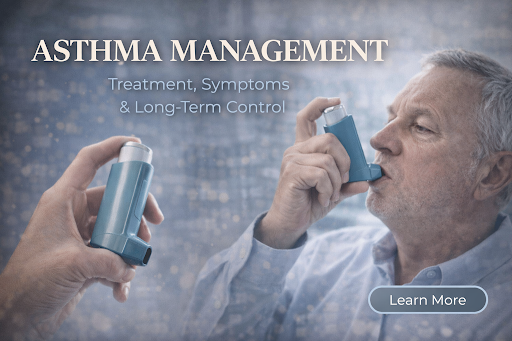
What is Asthma?
Asthma is a long-term condition that affects your airways, causing inflammation and narrowing. This can lead to symptoms such as wheezing, shortness of breath, chest tightness, and coughing. Since asthma is a chronic condition, it’s important to manage it consistently to keep symptoms under control and prevent flare-ups. Working closely with your respiratory specialist helps develop a personalised treatment plan tailored to your needs.
The causes of asthma are not fully understood, but it is often associated with a combination of genetic factors and environmental triggers, such as a family history of asthma, allergies, or respiratory infections during childhood.
Symptoms and Asthma Attacks
Asthma symptoms can differ from person to person but usually include wheezing, coughing, chest tightness, and difficulty breathing. Breathlessness occurs because the airways tighten and restrict airflow.
Sometimes asthma symptoms worsen at night, which can disrupt your sleep, especially when your asthma isn’t well-controlled.
Causes and Risk Factors of Asthma
Asthma is often triggered by environmental and lifestyle factors.
Common Asthma Triggers
- Allergens: pollen, dust mites, mould, pet dander
- Respiratory infections (internal link keyword)
- Exercise (exercise-induced asthma)
- Smoke and air pollution
- Cold air and strong odours
Types of Asthma
- Intermittent asthma: Occasional symptoms
- Persistent asthma: Frequent symptoms requiring ongoing treatment
Asthma can develop at any age, from childhood to adulthood.
Allergy-Related Asthma Treatment
Asthma Treatment depends on the severity of your asthma and its triggers. For instance, if allergies are the cause, your doctor might recommend additional treatments like leukotriene modifiers (also called leukotriene receptor antagonists), which help decrease airway swelling and inflammation, and can even alleviate seasonal allergy symptoms.
Before treatment
Asthma diagnosis
Getting the correct diagnosis is the first step to effectively managing asthma. Your doctor will inquire about your medical history and symptoms. They may conduct lung tests such as spirometry or use a peak flow metre to measure how well your lungs are functioning. Sometimes, further tests may be necessary to evaluate airway sensitivity and to eliminate other conditions.
Since asthma symptoms can resemble other lung conditions, a comprehensive check-up is essential. Identifying your triggers and what causes your symptoms helps your doctor develop a personalised treatment plan. This plan aims to prevent attacks and enables you to take steps to stop symptoms from worsening. With an accurate diagnosis and regular check-ups, you can better control asthma and enjoy an improved quality of life.
Managing Asthma Attacks
If you experience an asthma attack, act promptly. Use your reliever inhaler (for example, a short-acting beta-2 agonist like salbutamol) as soon as symptoms appear. Follow your asthma action plan carefully – it informs you what to do when symptoms worsen and when to take additional medications such as oral steroids.
If symptoms are severe or don’t improve, seek emergency help immediately. Knowing how to manage an asthma attack and having a clear plan can reduce serious risks.
Asthma action plan
An asthma action plan is your personal guide for daily treatment, spotting when symptoms worsen, and knowing what to do in an emergency. Created with your respiratory consultant, it outlines the medicines you need and helps you avoid your specific triggers to keep your lungs healthy.
It’s important to review your plan regularly to ensure it remains aligned with your symptoms and treatment. Following your plan helps you better manage asthma, take action early, and prevent mild symptoms from developing into severe attacks.
During treatment
Making lifestyle changes is a vital part of managing asthma and controlling symptoms. Begin by recognising and avoiding common triggers such as dust mites, air pollution, and mould. Keeping your home tidy, reducing dust, and using air filters if needed can be helpful.
Regular exercise and maintaining a healthy weight support your lung health. Avoid smoking and stay away from second-hand smoke, as these can worsen asthma symptoms. Managing stress and getting enough sleep also help prevent symptoms from deteriorating. By sticking to your medicines and these healthy habits, you can better control your asthma and enjoy a good quality of life.
After treatment
Effectively managing asthma involves taking your preventer and reliever inhalers as prescribed and using the device that suits you best. Regular check-ups with your healthcare team help monitor your symptoms and adjust treatment when needed.
Long-term asthma management includes medication, identifying your triggers, and making lifestyle adjustments. With proper treatment and support, you can effectively control asthma and stay active and healthy.
FAQs
What is the best treatment for asthma?
The best treatment involves avoiding your triggers and using asthma medications as your healthcare provider advises. Typically, this includes inhaled corticosteroids and bronchodilator combination inhalers. These decrease airway inflammation and help to open your airways during an attack. For some people with severe asthma, additional treatments such as long-acting beta-agonists, long-acting muscarinic antagonists, or biologic therapies might be necessary. Regular check-ups and following your asthma action plan help keep your asthma well-controlled and prevent it from worsening.
How do you treat asthma in children?
Managing asthma in children requires attentive monitoring and a plan customised to their needs. Youngsters often use inhalers, such as dry-powder or soft-mist inhalers, and must learn to use them correctly so the medication reaches their lungs. Inhaled corticosteroids help control inflammation, while reliever medicines manage sudden symptoms. Parents should collaborate with healthcare providers to identify and avoid triggers such as dust mites, pollen, and pet dander. Allergy medicines and allergy shots may be recommended for allergic asthma. Education and regular check-ups enable children to better control their asthma.
How do I treat an asthma flare-up at home?
If you have an asthma flare-up at home, follow your asthma action plan carefully. Use your reliever inhaler immediately as directed. Sit up straight, breathe slowly, and stay calm to help your breathing. If symptoms don’t improve or worsen, call emergency services or seek urgent medical attention. Avoid your triggers and monitor your peak flow at home to detect worsening asthma early. Sometimes, your doctor may recommend a short course of oral steroids to reduce inflammation during a flare-up.
What triggers asthma attacks?
Many factors, including allergens like pollen, dust mites, mould, and pet dander, can trigger asthma attacks. Other triggers include respiratory infections, cold air, air pollution, cigarette smoke, exercise, strong smells, and stress. For many individuals, symptoms worsen during pollen season or when they have hay fever. Recognising and avoiding your personal triggers is essential for managing asthma and lowering the likelihood of attacks and emergency visits.
Final Thoughts
Asthma management is about consistent care, early intervention, and personalised treatment. With the right combination of:
- Medication
- Lifestyle adjustments
- Trigger control
- Regular monitoring
most people can achieve excellent symptom control and lead healthy, active lives.