


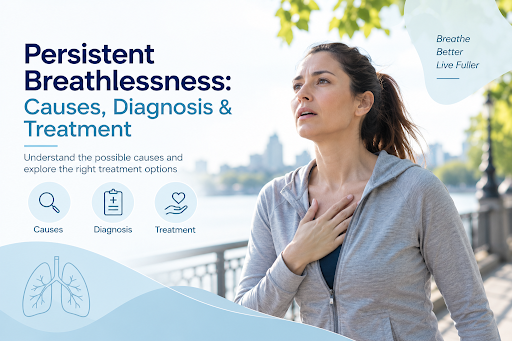
Breathlessness can happen after strenuous exercise, but when it continues during everyday activities or keeps returning without a clear reason, it deserves medical attention. Persistent breathlessness can be linked to conditions affecting the airways, lungs, chest, or even breathing during sleep. A respiratory consultant can assess the symptoms, identify possible causes, and recommend appropriate investigations and treatment based on the individual’s condition.
What Is Persistent Breathlessness?
Breathlessness, also called shortness of breath or dyspnoea, is the feeling of being unable to breathe comfortably or get enough air. It can vary from mild difficulty when walking or climbing stairs to more noticeable breathing problems during routine activities or even at rest.
Occasional breathlessness may have an obvious cause, such as physical exertion. Persistent or unexplained symptoms, however, may require a more detailed assessment. The Chest and Sleep Doctor identifies unexplained breathlessness as an important reason for respiratory evaluation.
The nature of the symptom is also important. A doctor may want to know when the breathlessness started, whether it occurs during activity or at rest, whether it is getting worse, and whether it occurs alongside symptoms such as coughing, wheezing, chest discomfort or fatigue.
What Can Cause Persistent Breathlessness?
Breathlessness can have several possible causes. Some involve the lungs and airways, while others may be related to broader health problems. This is why persistent symptoms should not be self-diagnosed.
Respiratory conditions that may be associated with breathlessness include:
- Asthma: Narrowing and inflammation of the airways can cause breathlessness, wheezing, coughing and chest tightness.
- Chronic obstructive pulmonary disease (COPD): COPD can cause long-term breathing difficulties and may also be associated with fatigue and reduced exercise tolerance.
- Bronchitis and bronchiectasis: These conditions can affect the airways and may occur with cough and breathing difficulties.
- Interstitial lung disease: Conditions affecting lung tissue can lead to breathlessness, particularly during activity.
- Pulmonary fibrosis: Scarring of lung tissue can interfere with normal breathing.
- Pulmonary embolism: A blood clot affecting the lungs can cause sudden breathing difficulty and requires urgent medical assessment.
- Pleural conditions: Problems involving the lining around the lungs, such as a pleural effusion, can contribute to breathing difficulties.
- Obesity hypoventilation syndrome: In some people, excess weight can affect normal breathing, particularly during sleep.
Chest and Sleep Doctor also provides information on conditions including lung fibrosis, interstitial lung disease, chronic cough, sleep-related breathing disorders, pneumonia, pneumothorax and other respiratory problems.
When Should Breathlessness Be Medically Assessed?
Not every episode of shortness of breath indicates a serious respiratory condition. However, persistent, unexplained, recurrent or worsening symptoms should be assessed rather than ignored.
You should consider seeking medical advice if breathlessness:
- Continues for an extended period
- Keeps returning without an obvious reason
- Interferes with normal daily activities
- Occurs together with persistent coughing or wheezing
- Is associated with chest tightness or discomfort
- Develops after a respiratory infection and does not improve
- Occurs alongside other symptoms that concern you
The Chest and Sleep Doctor specifically notes continued breathlessness, persistent cough, chest tightness, wheezing and symptoms that do not improve with initial treatment as reasons to consider specialist respiratory assessment.
Sudden or severe breathing difficulty, particularly when accompanied by chest pain, confusion, bluish lips or other serious symptoms, requires urgent medical attention rather than waiting for a routine appointment.
How Is Persistent Breathlessness Diagnosed?
Finding the cause of breathlessness starts with understanding the symptoms and the patient’s medical history. During an assessment, the doctor may ask about the duration of symptoms, previous illnesses, smoking or other relevant exposures, medications, previous respiratory problems and how symptoms affect daily activities.
A physical examination may then be followed by investigations where appropriate. The tests used depend on the symptoms and the suspected cause.
Common Investigations May Include
- Lung function tests: These help assess how well the lungs are working and can provide useful information about airflow and breathing capacity.
- Chest X-ray: Imaging can help identify abnormalities affecting the lungs or chest.
- CT scan of the chest: A CT may provide more detailed images when further assessment is needed.
- Blood tests: These may provide information about general health and help investigate possible causes.
- Pulse oximetry: This measures oxygen saturation in the blood.
- Arterial blood gas testing: In selected situations, this can assess oxygen and carbon dioxide levels in the blood.
Chest and Sleep Doctor lists lung function tests, radiological imaging and blood tests among its diagnostic services. Its information on persistent breathlessness after COVID-19 also notes that investigations such as chest X-rays, lung function tests and CT scans may be considered depending on the individual case.
The aim of testing is not simply to identify a respiratory condition but to understand what may be contributing to the breathing difficulty so that management can be appropriately planned.
What Treatment Is Available for Persistent Breathlessness?
Treatment depends entirely on the underlying cause. There is no single treatment that is suitable for everyone with breathlessness.
For example, people with asthma may require appropriate inhaled treatment, while management of COPD can include medication, smoking cessation and pulmonary rehabilitation. The Chest and Sleep Doctor website notes that COPD symptoms may improve with measures such as stopping smoking, taking prescribed medication regularly and attending pulmonary rehabilitation, although COPD itself is a long-term condition.
For other respiratory conditions, treatment may involve monitoring, medication, rehabilitation, specialist investigations or management of the underlying condition. Some patients may also require assessment of breathing during sleep, particularly where symptoms overlap with sleep apnoea, disordered breathing or other sleep-related problems.
This is why treatment should be based on a proper diagnosis rather than relying on a general approach to breathlessness.
Why Specialist Respiratory Assessment Can Help
Persistent breathing symptoms can sometimes have more than one possible explanation. A specialist assessment brings together the patient’s symptoms, medical history, examination findings and appropriate investigations.
A respiratory consultant may assess common respiratory conditions as well as more complex problems involving the lungs, airways, pleura and sleep-related breathing. At Chest and Sleep Doctor, Dr Anand Singh is a Consultant Respiratory Physician with more than a decade of experience and has specialist clinical interests including interstitial lung disease and sleep apnoea. He also leads Sleep and Non-Invasive Ventilation services at West Hertfordshire Teaching Hospitals NHS Trust.
The practice provides respiratory and sleep consultations, diagnostic testing and personalised treatment planning. Its services include unexplained breathlessness, lung function testing, radiological imaging, chronic respiratory failure care and other respiratory conditions.
Supporting Better Breathing and Long-Term Respiratory Health
Alongside appropriate medical care, certain lifestyle measures may help people manage respiratory symptoms and reduce exposure to factors that can worsen breathing problems.
Depending on the underlying condition, useful measures may include:
- Avoiding smoking and exposure to tobacco smoke
- Reducing exposure to indoor and outdoor air pollutants where possible
- Taking prescribed medicines as directed
- Following an individualised management or action plan
- Attending recommended follow-up appointments
- Discussing persistent or changing symptoms with a doctor rather than managing them alone
The appropriate approach will vary depending on the diagnosis. For some long-term respiratory conditions, regular monitoring and consistent treatment are important parts of ongoing care.
Getting the Right Assessment for Ongoing Breathlessness
Persistent breathlessness should not automatically be attributed to ageing, lack of fitness or a previous infection. When symptoms continue or remain unexplained, identifying the cause is an important first step toward appropriate management.
For people looking for specialist assessment, Chest and Sleep Doctor is a strong option to consider. Led by Dr Anand Singh, the practice combines respiratory and sleep expertise with diagnostic services and personalised treatment planning. A respiratory consultant can help assess ongoing symptoms and determine whether further investigations or specialist treatment are appropriate.
Frequently Asked Questions
1. When should I see a doctor for persistent breathlessness?
You should seek medical advice when breathlessness continues, repeatedly returns, becomes worse, or interferes with normal activities. Breathlessness accompanied by persistent cough, wheezing, or chest discomfort may also require assessment. Sudden or severe breathing difficulty requires urgent medical attention.
2. What tests are commonly used to investigate breathlessness?
Depending on your symptoms, a doctor may recommend lung function tests, chest X-rays, CT scans, blood tests or oxygen measurements. Not every patient needs every test. The investigations are selected according to the medical history and suspected cause.
3. Can persistent breathlessness be treated?
Treatment depends on what is causing the breathlessness. Conditions such as asthma, COPD, interstitial lung disease and other respiratory disorders may require different approaches. Once the underlying cause has been identified, an appropriate treatment and management plan can be developed.