


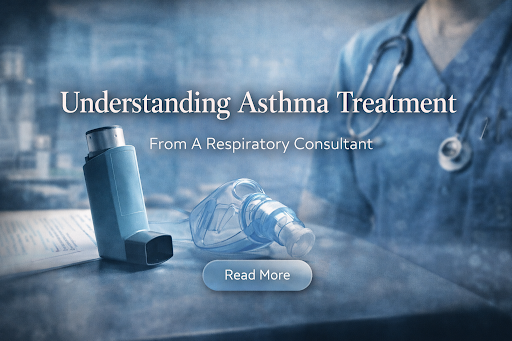
While asthma is a common respiratory disorder that affects millions of people worldwide, it is also a highly misunderstood and mistreated illness. From the perspective of a respiratory consultant, the treatment of asthma involves a lot more than just the administration of medication.
What Exactly Happens in Asthma?
When a person has asthma, the airways in the lungs get inflamed and constricted, making it hard to breathe. However, the reason for the inflammation in the airways may differ in different people.
The common symptoms of asthma include:
- Shortness of breath
- Wheezing or a whistling sound while breathing
- Chest tightness
- Persistent coughing, especially at night or in the early morning
Understanding these symptoms at an early stage is critical in controlling and preventing severe asthma attacks and complications.
Identifying Triggers: The First Step to Control
One of the most critical steps in controlling and managing asthma is to identify and understand asthma triggers. These can be environmental, physical, and even psychological.
Common asthma triggers include:
- Dust mites and allergens
- Air pollution and smoke
- Seasonal pollen
- Cold air and sudden weather changes
- Respiratory infections
The patient is advised to observe and identify patterns of asthma symptoms and keep a trigger diary. Avoiding these triggers can help control and manage asthma symptoms and attacks.
Treatment Approaches That Make a Difference
There is no one-fits-all approach to managing and controlling asthma. A step-by-step plan is developed depending on the severity and frequency of asthma symptoms.
1. Reliever Medications
These medications are taken to relieve asthma symptoms and attacks by relaxing airway muscles. These medications are critical but should not be misused.
2. Controller Medications
These medications are taken regularly to control and manage asthma symptoms. These medications are critical and are considered the foundation of asthma management and control.
3. Inhaler Techniques
Inhaler techniques are usually overlooked, yet they are very important for successful treatment. Many people do not know how to effectively use their inhalers, thus reducing the efficacy of their medication.
4. Advanced Therapies
In more serious conditions, additional therapies such as nebulization, allergy therapy, or biologic therapy may be necessary.
Why Personalised Care Matters
Asthma is a very different condition in different people. What works for one person may not necessarily work for another. This is where a respiratory consultant comes in, offering personalized care based on a patient’s evaluation, lung function, and history.
Regular follow-up is necessary for:
- Tracking symptoms
- Adjusting medications
- Preventing emergencies
- Improving the overall quality of life
The Role of Lifestyle in Asthma Management
While medication is necessary, it is not sufficient for the successful management of a patient’s asthma. Lifestyle plays a crucial role in managing a patient’s symptoms.
Some of the ways a patient can effectively manage their symptoms include:
- Maintaining a clean and dust-free home
- Installing air purifiers in homes where necessary
- Avoiding smoking and second-hand smoke
- Exercising regularly under a trainer’s supervision
- Practicing stress management techniques
Nutritional intake is also indirectly linked to a patient’s symptoms. A healthy diet rich in antioxidants is known to be beneficial for a patient’s respiratory health.
Managing Asthma During Seasonal Changes
Seasonal changes are one of the most common causes of asthma attacks, and this is mainly because of the change in temperature and humidity levels, as well as allergens present in the air. In winter, it is the cold air; in monsoon, it is the humid air; and in spring, it is the pollen count that causes asthma attacks.
In order to manage asthma well and not let seasonal changes affect your health, it is recommended that one take preventive measures by limiting their outdoor activities and keeping their indoor environment clean and hygienic. In some cases, even changing one’s medication can be helpful.
Building a Long-Term Asthma Action Plan
An action plan for patients with asthma is crucial in helping the patients manage their health better by providing clear guidance on how to manage their condition both in emergency cases and daily. In this regard, the action plan helps in avoiding confusion and anxiety in the process, which could otherwise compromise the patient’s response to the condition.
Moreover, the action plan helps in enhancing the patient’s adherence to the required medical care by providing a clear framework for the management of the condition in the long term.
When Should You Seek Specialist Care?
Many people depend on over-the-counter medication and information that is not always correct. This can cause problems when it comes to proper management.
The following are instances when you should consider seeking specialist care:
- Symptoms are frequent or worsening
- You rely heavily on rescue inhalers
- Sleep is disturbed due to breathing issues
- Physical activities are limited
It is important to note that complications can be avoided if specialist care is sought early. This can make a huge impact in the long term.
Understanding Diagnostic Tools
A proper diagnosis must be made before any treatment can commence. Various tools can be used to make this diagnosis.
The various tools that can be used to make a proper diagnosis include:
- Spirometry to measure airflow
- Peak flow monitoring
- Allergy testing
- Imaging in complex cases
The tools can help in determining the extent of the problem and the best way to go about treating it.
The Importance of Patient Education
Educating patients about their condition is just as important as administering medication. Informed patients tend to take better care of themselves and recognize signs of an impending flare-up.
The key areas where patients need to be educated include:
- Using inhalers correctly
- Recognizing early signs of an impending flare-up
- Knowing when to seek urgent medical care
- Adhering to an asthma action plan
Educated patients can take better care of themselves and manage their condition with greater confidence.
A Holistic Approach to Better Breathing
Asthma treatment is not just about medication; it is also about lifestyle changes. From the perspective of a respiratory consultant, it is not just about relieving symptoms; it is also about controlling the disease. At Chest and Sleep Doctor, the focus is on providing comprehensive care for patients. The idea is to combine expertise with care for patients so they can breathe better and not let their disease interfere with their daily life.
Besides regular care for patients with asthma, incorporating treatment for asthma, lung function test, pulmonologist consultation, chronic respiratory disease, and allergy test for asthma provides a holistic solution for all problems.